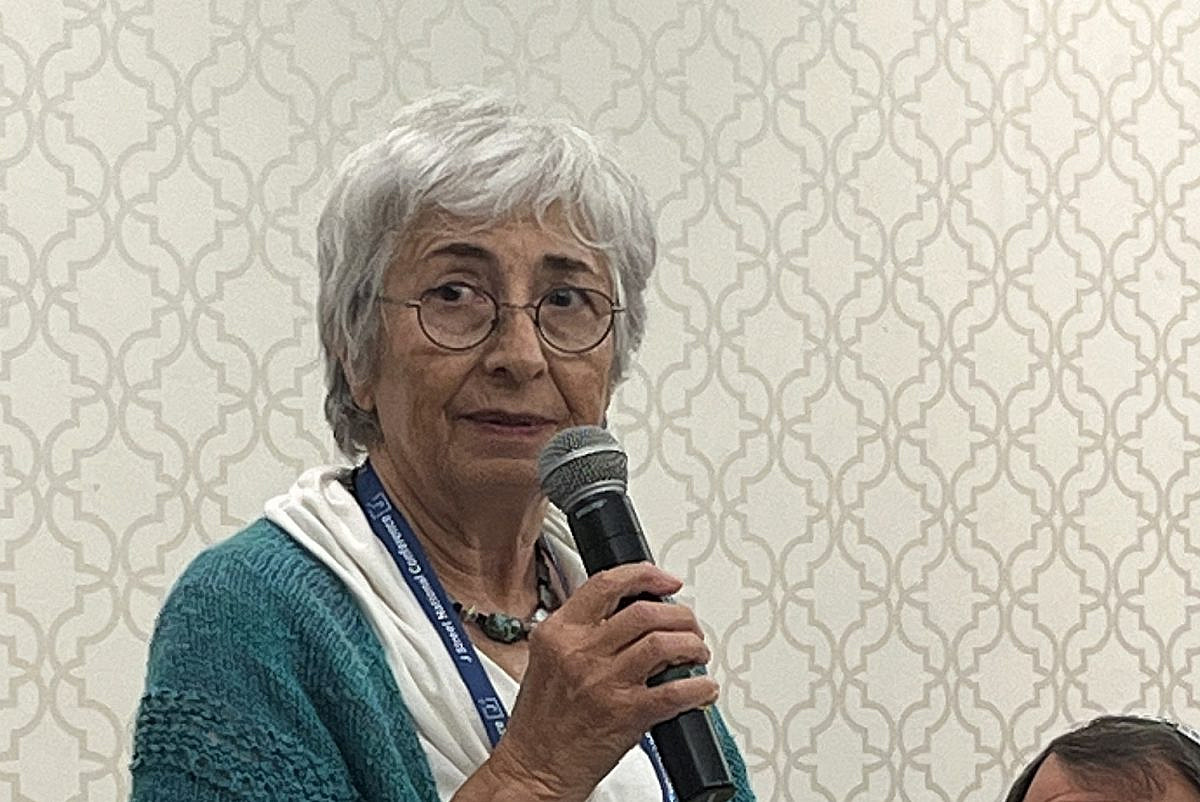
Vivian Silver spent her life building bridges. Born in Winnipeg, Canada, in 1949, she immigrated to Israel in her twenties and eventually settled at Kibbutz Be'eri, a community less than five kilometres from the Gaza border. For decades, she was one of the most visible Israeli peace activists working toward coexistence with Palestinians — co-founding the Arab-Jewish Centre for Equality, Empowerment, and Cooperation, and volunteering with Road to Recovery, an organisation that drove Palestinian patients from Gaza to hospitals in Israel.
She knew Palestinians in Gaza personally. She had sat in their homes, eaten with their families, driven their children to medical appointments. Her peace work was not abstract or theoretical — it was built on relationships, on the stubborn belief that proximity and shared experience could overcome the political structures that divided the two peoples.
On the morning of 7 October 2023, Hamas militants breached the fence and entered Kibbutz Be'eri. The attack on Be'eri was among the deadliest of the day — over 100 residents were killed in a community of roughly 1,100. Vivian sent text messages to her sons during the attack, reporting that militants were in the kibbutz, that she was hiding. The messages stopped.
For weeks, her family believed she had been taken hostage. Her son Yonatan Silver became a public advocate for the hostages, speaking at rallies and to international media, holding onto the hope that his mother was alive in Gaza. On 13 November, the family was informed that Vivian's remains had been identified through forensic analysis. She had been killed in the attack. She was seventy-four years old.
The cruelty of her death — a peace activist killed by the very violence she had spent her life opposing — was not lost on anyone. Yonatan, in the days after learning of his mother's death, made a statement that embodied her legacy: he refused to let grief become hatred. He spoke publicly against the bombardment of Gaza, arguing that his mother would have opposed the collective punishment of the Palestinian population she had spent decades serving.
Vivian Silver's story sits at the moral centre of this conflict. She represents the possibility — diminished but not extinguished — that Israelis and Palestinians can see each other as fully human. Her death did not prove that peace work is futile. It proved that it is dangerous, and necessary, and that the people who do it are often the first casualties of the violence they sought to prevent.
In the months after October 7, as the war in Gaza escalated, peace organisations on both sides experienced what they described as an existential crisis. The people who had built relationships across the divide found those relationships tested by grief, rage, and the pressure of their respective communities. Vivian's colleagues continued her work, but they did so in her absence — carrying her name as both tribute and reproach to a world that had failed to protect the people trying to end the conflict.