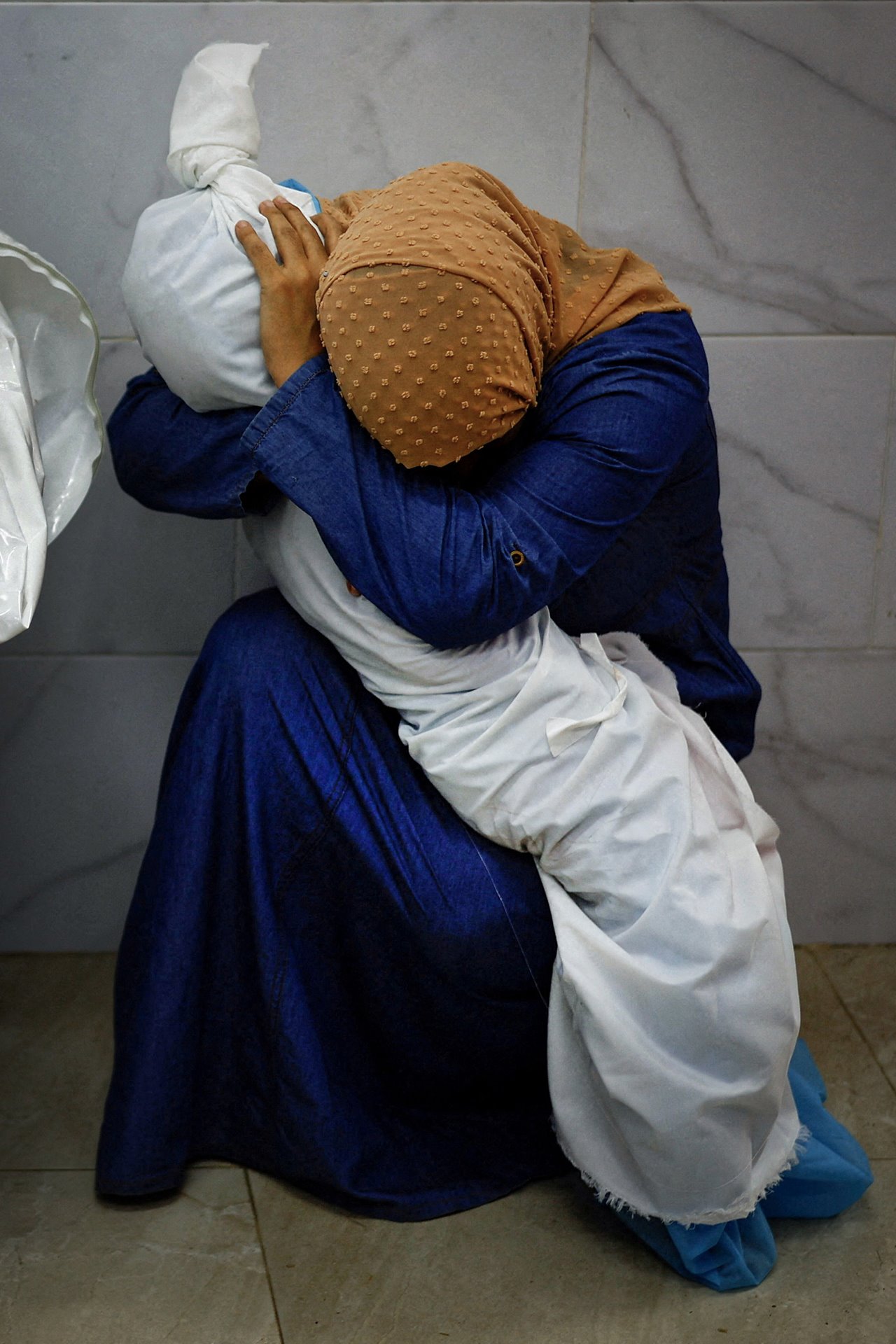
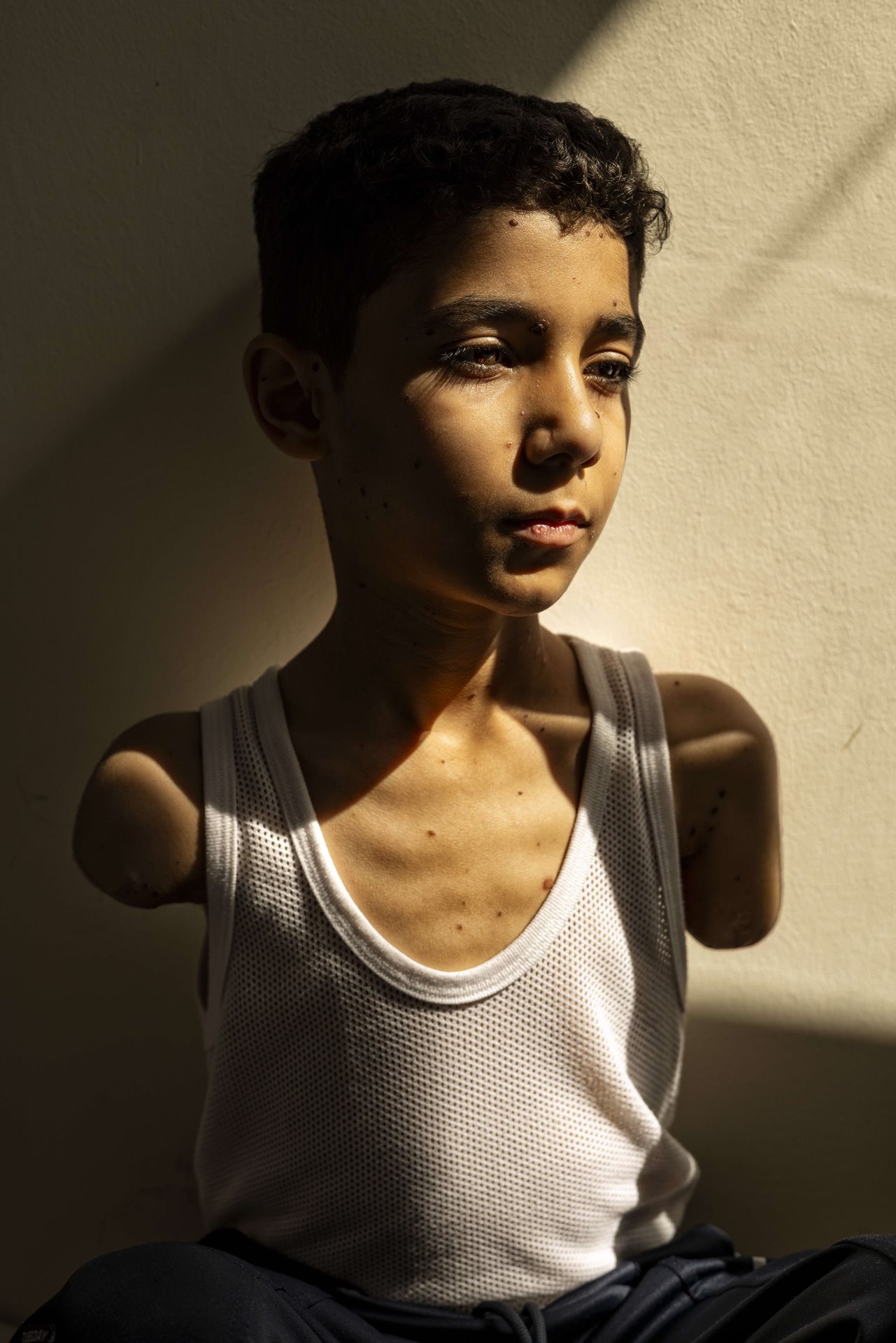
Mohammed Hamdan was a father, a son, a grandson. He was also one of the last surviving members of an extended family that had numbered in the dozens. In a single Israeli airstrike on their family compound in Khan Younis in November 2023, more than thirty of his relatives were killed — three generations erased in seconds.
The images that emerged from the aftermath showed Mohammed standing in what had been a home, surrounded by rubble that still held fragments of domestic life: a child's shoe, a kitchen tile, the twisted frame of a bed. Reuters photographers captured his face — the expression beyond grief, beyond shock, in a territory that language fails to map.
Mohammed's family had done what thousands of Gazan families did when the bombardment began: they gathered together. The logic was simple and ancient — in crisis, you stay with your people. Across Gaza, extended families consolidated into single buildings, believing there was safety in togetherness, that surely a family home full of civilians would not be targeted. The opposite proved true. Multi-generational family homes became mass graves.
The United Nations documented a pattern of strikes on family compounds throughout the offensive, with entire lineages destroyed in single attacks. The Hamdan family was one of dozens — the Abu Salah family, the Al-Dalu family, the Abul-Ouf family — whose names appear in the Gaza Health Ministry's records as clusters of ten, twenty, thirty casualties sharing the same surname.
Mohammed survived because he had stepped out. The randomness of it — the errand that saved him, the minute that separated his life from their deaths — is a detail he has spoken about publicly, each time with the bewilderment of someone still trying to comprehend the arithmetic of survival.
In the months that followed, Mohammed became one of the voices documenting what demographers and human rights investigators would later describe as familicide at scale — the systematic destruction of family units as a feature, not an accident, of modern warfare. His testimony, given to Reuters and multiple human rights organisations, forms part of the evidentiary record that will follow this war for decades.