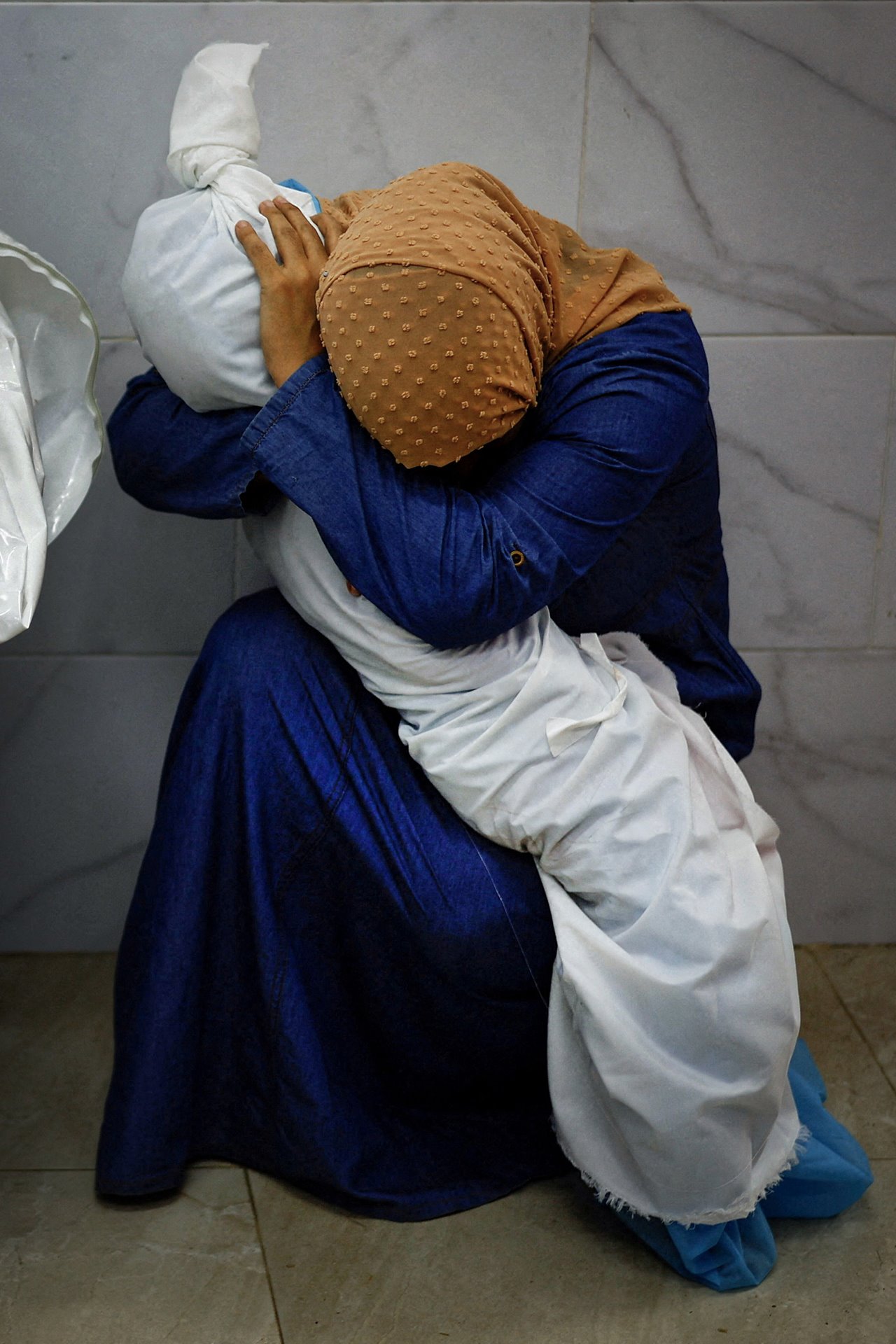
The newborn fits in two cupped hands. In the photograph, taken at a medical facility in Deir al-Balah in June 2024, a healthcare worker holds the infant with extraordinary care — fingers spread beneath a body so small and so fragile that the image reads less as medicine and more as an act of witness.
The child was born into a Gaza where the systems designed to protect newborns had been systematically dismantled. Maternity wards in major hospitals had been destroyed or evacuated. Neonatal intensive care units, dependent on electricity for incubators and ventilators, operated on generators with intermittent fuel supply. The World Health Organization reported that premature births and low birth weight deliveries had increased sharply — consequences of maternal malnutrition, stress, and the absence of prenatal care.
In the months preceding this birth, UNICEF documented a crisis within the crisis: maternal and infant mortality rates climbing as the healthcare infrastructure collapsed. Pregnant women displaced multiple times found themselves delivering in shelters, tents, or open spaces without medical support. Caesarean sections were performed by torchlight. Postpartum haemorrhage — the leading cause of maternal death globally — became frequently fatal in the absence of blood supplies and surgical capacity.
This newborn entered a world where the most basic requirements of neonatal survival — warmth, nutrition, sterile conditions, monitoring — were luxuries. The field hospital where the photograph was taken provided what care it could, but the gap between a Level III NICU and a tent with limited supplies is measured in outcomes that medical literature describes with clinical precision and human experience knows as grief.
The image circulated globally as part of Reuters' coverage of the famine crisis, joining a growing archive of photographs documenting infant vulnerability in wartime Gaza. Each image carried the same implicit argument: that the youngest and most vulnerable members of a population were being subjected to conditions incompatible with survival, and that these conditions were not natural disasters but the foreseeable consequences of deliberate policy.
This child — unnamed in the public record, held in two hands in a field hospital — represents the war's smallest victims. Not combatants, not collateral, not statistics. Newborns, arriving into a world that had already decided how little their lives would be worth.