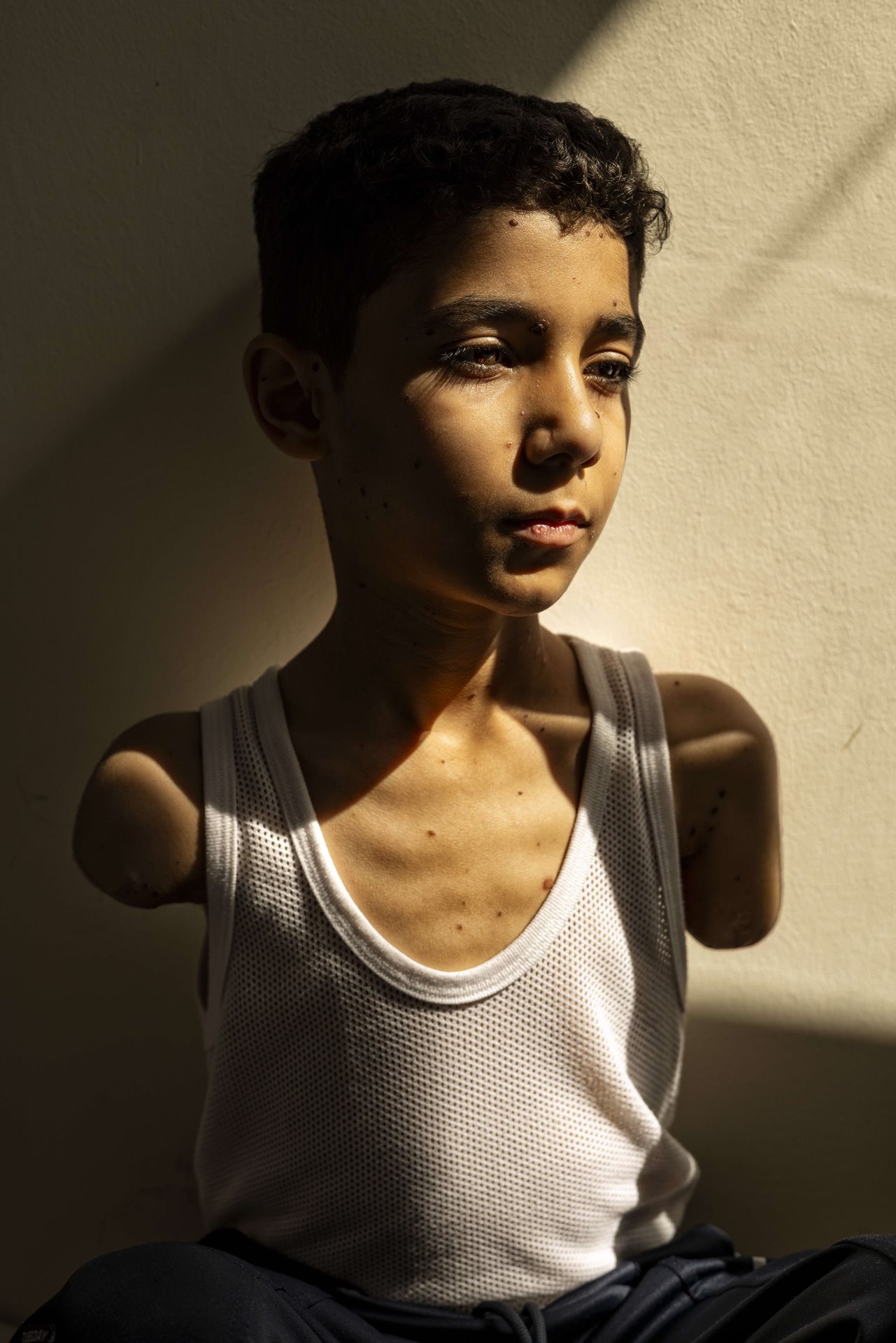
Saifeddin Issam Ayad Abutaha was Palestinian. This fact, in the context of his death, carries a weight that the international response to the World Central Kitchen strike made painfully visible. When seven WCK workers were killed on 1 April 2024, the global outcry focused overwhelmingly on the international staff — the Australian, the Pole, the Britons, the American-Canadian. Saifeddin, the Palestinian member of the team, received a fraction of the attention.
He was from Rafah, in southern Gaza. He worked as a driver and security coordinator for WCK — one of the local staff who made international humanitarian operations possible. Without people like Saifeddin, who knew the roads, the checkpoints, the local dynamics, and the rapidly shifting geography of a territory being reshaped daily by bombardment, no foreign aid worker could operate. He was the connective tissue between the international mission and the ground reality.
On the night of the strike, Saifeddin was driving one of the three vehicles in the deconflicted convoy. He had helped coordinate the delivery of 100 tonnes of food aid — enough to feed thousands of families. The route had been cleared with the Israeli military. The vehicles bore the WCK insignia. Every protocol designed to protect humanitarian workers had been followed.
The three sequential strikes that killed Saifeddin and his six colleagues were later described by military analysts as inconsistent with any credible claim of misidentification. The vehicles were tracked, the coordinates were shared, and the strikes were separated by enough time and distance to suggest deliberate targeting of survivors moving between vehicles.
In the aftermath, Saifeddin's family in Rafah mourned alongside a community that had already lost hundreds of humanitarian workers. By the time of his death, Gaza's local aid workers had suffered casualties at a rate unprecedented in any modern conflict. They continued to work because the alternative — the complete cessation of food distribution to a starving population — was unthinkable.
The differential in attention between Saifeddin and his international colleagues was not lost on Palestinian commentators. It illustrated a hierarchy of grief that had defined the entire conflict: the deaths of Palestinians, even those working in clearly humanitarian roles for internationally recognised organisations, registered differently on the global conscience than the deaths of Westerners doing the same work in the same vehicle on the same road.